
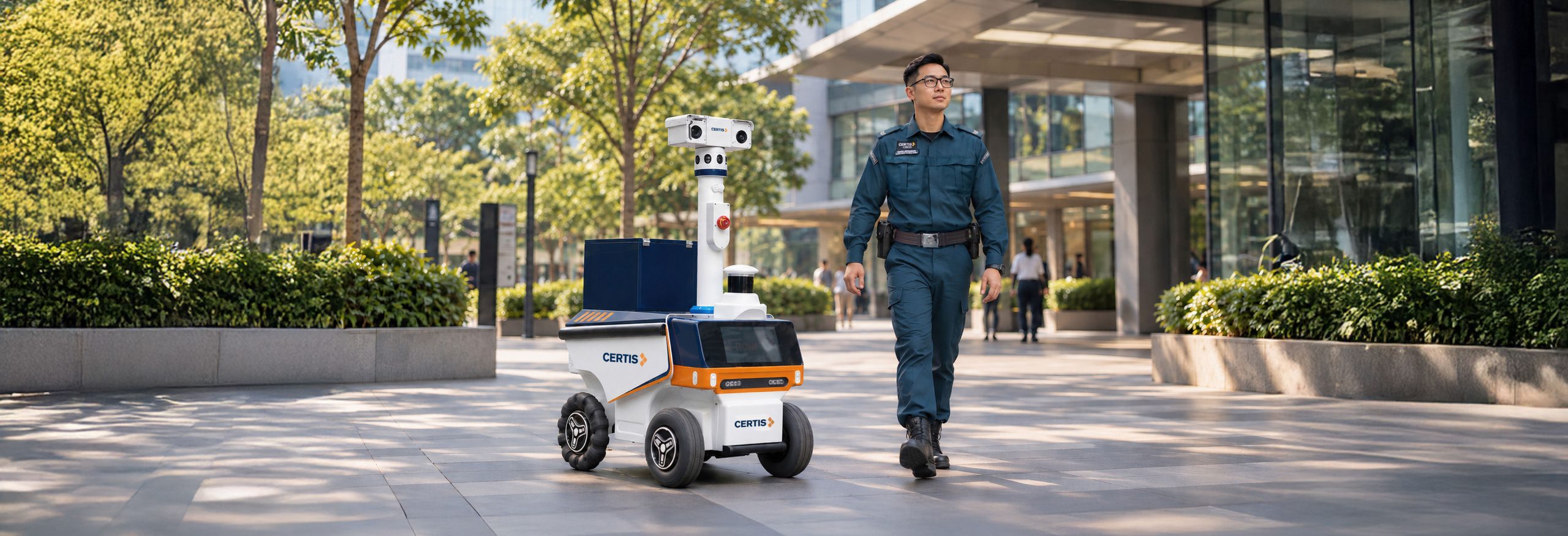
Robots are becoming a routine part of how large sites are secured. Having deployed more than 60 of them across more than 30 sites, we have found the robot is rarely the hard part. The hard part is the handover: the moment a robot’s alert becomes an officer’s decision.
Why collaboration is the practical model
Will robots replace security officers? It is the question we hear most often, and the evidence points to a plain answer: not on most sites, and not soon.
Physical work, such as security operations, is hard to automate end to end. Deloitte’s analysis of more than 19,000 US federal work tasks, published in March 2026, found that only about 5% of physical tasks are easy to automate, while 84% have moderate potential. For the next several years, the workable model is collaboration: robots take part of a task, people take the rest, and information passes between them.
In Singapore, the security industry already wants the technology. A 2025 Ministry of Home Affairs survey found more than 80% of Singapore’s security agencies are keen to adopt more advanced security technology, against a backdrop of persistent manpower constraints. Many of those agencies also said they struggled to select and deploy it. That gap, between wanting the technology and making it useful, is the most difficult part of the work to make it happen.
Robots and Humans: Who does what
At Certis, we have spent the last two years working on that gap, putting robots to work alongside officers on live sites. More than 60 robots now operate across more than 30 sites, and each deployment has shown us which tasks a robot handles reliably and which still need a person, even after weighing in the sensitivity and criticality of each role and function.
What we have learned is that the most efficient work allocation, is to simply give each what it does best.
Robots take the repetitive, round-the-clock and physically demanding work. A patrol robot, whether wheeled, four-legged or humanoid, can cover the same route day and night without its attention drifting. It can run environmental checks and use video analytics to flag unusual activity, including where fixed cameras do not reach.
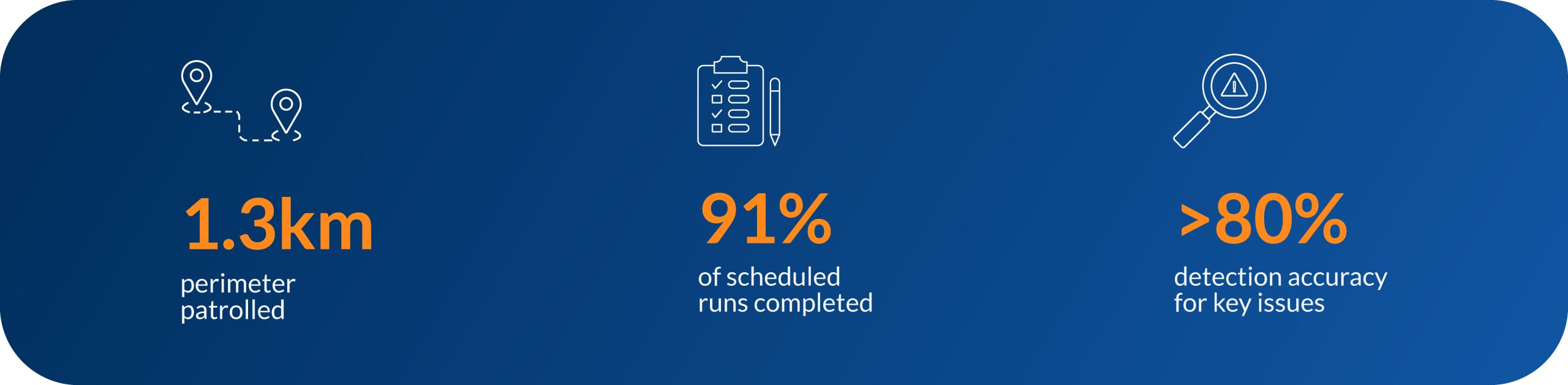
In a three-month trial at a client’s site in Singapore, a quadruped robot ran scheduled autonomous patrols along a 1.3km perimeter alongside the existing security team. It completed 91% of its scheduled runs and detected core issues such as unattended bags, vegetation encroachment and fence obstructions more than 80% of the time. The accuracy should improve significantly with more time on the ground.
Robots can also go first. When an alarm is raised, a robot can be sent to check it before an officer is dispatched. The responding officer arrives knowing what they are walking into, and false alarms can be cleared without pulling anyone off their post.
Human officers must keep the work that needs judgement. They read the situation on the ground, talk to the people involved, calm things down and decide whether to escalate. With fewer routine rounds, officers have more time for tenants and visitors, and for supervising the robots and systems that support them.
The handover is where it works or fails
A robot that patrols well but reports into its own dashboard has added one more screen for someone to watch. The true value of its role only realises when its detection alerts the right person at the right time, for the human to respond.
In a conventional model, this will depend on everyone working from the same picture. Take a facility where an unusual temperature reading, an open door and an intrusion alert all occur at the same location. In many traditional command centres, these distinct and separate incidents will arrive as three alerts from three systems, and an operator has to work out whether they are connected.
On a single platform, these three incidents arrive as one prioritised incident with location and context attached. The technology determine the possible causes; the operator skips the detective work and goes straight to deciding what to do.
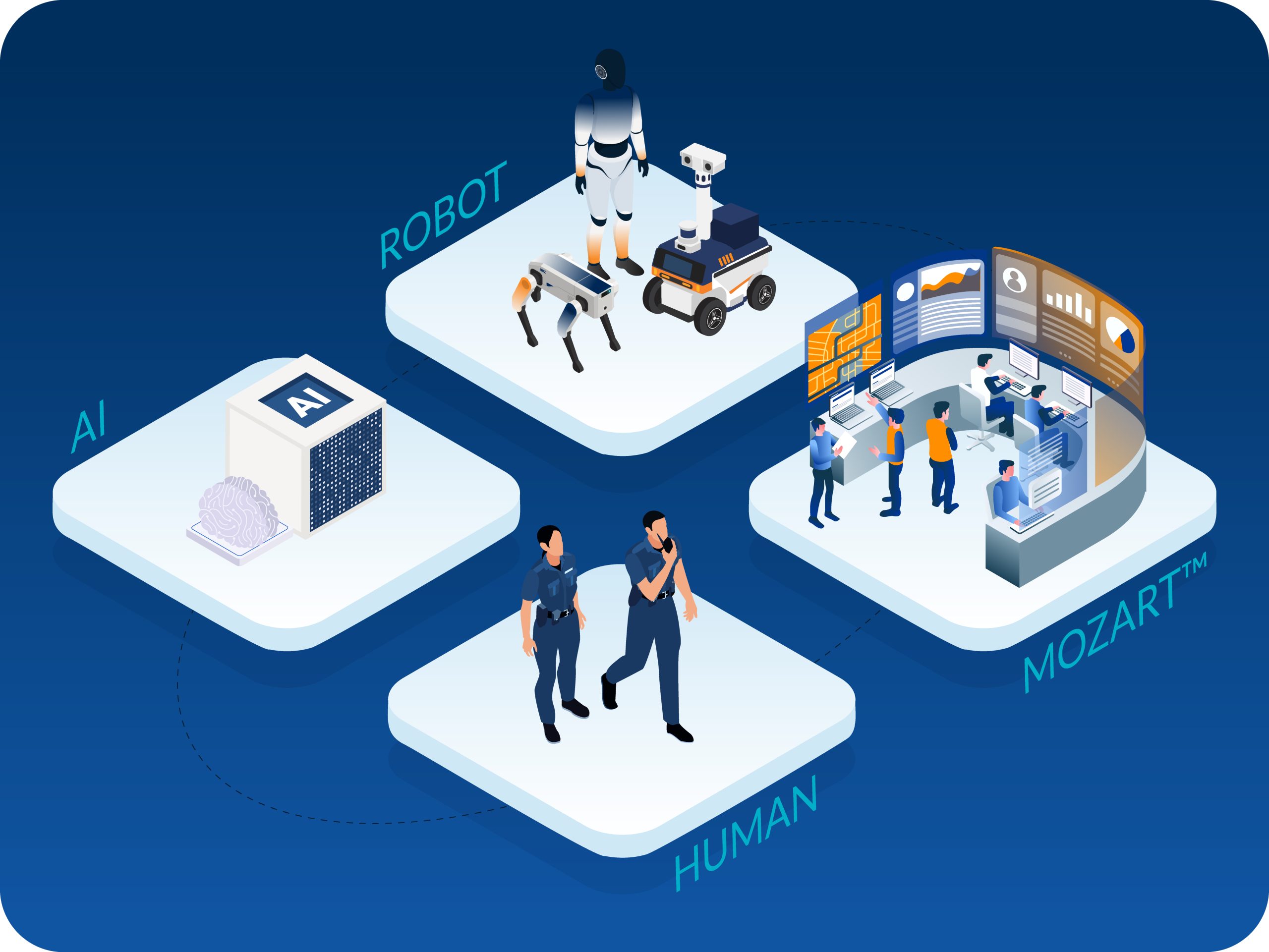
At Certis, this is the job of Mozart, our intelligent orchestration platform, and Arc, the AI that powers it. Mozart connects officers, robots, CCTV, sensors and site systems, so each event is read against everything else on the site and routed to the right responder, human or robot.
The data that builds up over time also helps train its reliability, just like experience in a human operator. Over time, Mozart can show where and when problems recur, so teams can adjust patrol routes, do preventive maintenance, and determine how many officers and robots a site needs at different hours, based on what happens there rather than a fixed roster.
What changes for officers
Every robot deployment changes how a team operates. For starters, officers take on new work: supervising robot operations, learning how to troubleshoot robot issues, interpreting what robots and sensors report, and acting on incidents when human intervention is required. Gartner, which named physical AI one of its top technology trends for 2026, expects organisations to require those skillsets to bridge IT, operations and engineering, along with careful change management to ensure a seamless transformation of work processes.
Singapore is building the pathway. In November 2025, MHA announced a Security Technologist training track for people who deploy and maintain security technology. At Certis, officers on robot-supported sites are trained to operate the robots and do first-line maintenance: starting and pausing patrols, reviewing what a robot has flagged, and clearing simple faults before calling in technical support.
The security officer role has evolved from walking the rounds to supervising the robots doing the rounds. In addition, the skills that the officers build along the way can be carried into command centres and other technology-led roles.
The wider shift is already under way. Employers surveyed by the World Economic Forum expect the share of work done mainly by people to fall from 47% in 2025 to roughly a third by 2030, with the rest split between technology and people working with it.
That makes workforce design a management decision as much as a technology one. A robot added to an unchanged roster tends to be underused, as human officers simply don’t know what to do with them. The sites that extract the best value from robots are the ones who actively redesign the roles of both humans and robots: which rounds the robot takes, who supervises it, and what happens when it raises an alert.
The future of security will be designed around One Workforce
As robotics and physical AI advance, security operations will be defined by how well organisations bring human expertise and autonomous capability together. The next stage goes beyond assigning robots to existing tasks. Operations will be designed around what people, robots and AI each do best, with patrol coverage, incident response and deployment informed by real operational data.
For business and security leaders, that changes the question. How many robots to deploy matters less than these four:
- Where can autonomous systems extend coverage most effectively?
- Which responsibilities should stay with officers because they need human judgement?
- How does intelligence from robots, sensors and existing systems become coordinated action?
- How must workforce skills and operating models change to sustain that value?
The organisations that succeed will be those that integrate robots best, which is not the same as owning the most advanced ones. At Certis, we call this One Workforce: officers, robots and the AI that connects them, planned, trained and managed as one team. We have run critical operations since 1958, and we are building it from the operator’s seat.
The future of security will not replace human expertise. It will amplify it, through a workforce where people, robotics and AI work as one.
One Workforce, Greater capabilities, Better operational outcomes.
Sources
- Ministry of Home Affairs, Security Industry Conference 2025: Speech by Ms Sim Ann, 12 November 2025. Manpower constraints, the 80% survey finding, deployment challenges, Security Technologist track.
- World Economic Forum, The Future of Jobs Report 2025, Chapter 2: Jobs Outlook, 7 January 2025. Current and projected split of work between people, technology and both.
- Deloitte Center for Government Insights, From digital to physical: Transforming the public sector with robotics and physical AI, 23 March 2026. Automation potential of physical tasks.
- Gartner, Gartner Identifies the Top Strategic Technology Trends for 2026, 20 October 2025. Physical AI as a top trend; skills and change management.